
1325 Linear ATC CNC Router for Woodworking
- Brand: Blue Elephant
- Model: ELECNC-1325 ATC
- Standard: CE, ISO9001
- Table size: 1300mm*2500mm (4′ x 8′)
- Category: ATC CNC Router
- Supply Ability: 400+ Units in Stock
- After-sale Service: Free Lifetime Technical Support online, Overseas service.
- Payment Terms: Online (T/T, PayPal, Trade Assurance) / Offline (T/T, LC, Credit Cards)
- Warranty: 12-month Limited Warranty for Entire Machine (Extended Warranties Available for Major Parts)
Description
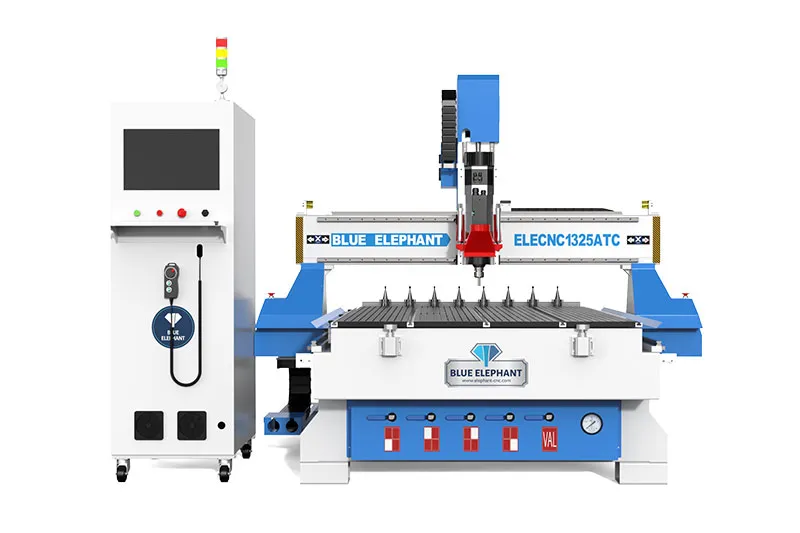
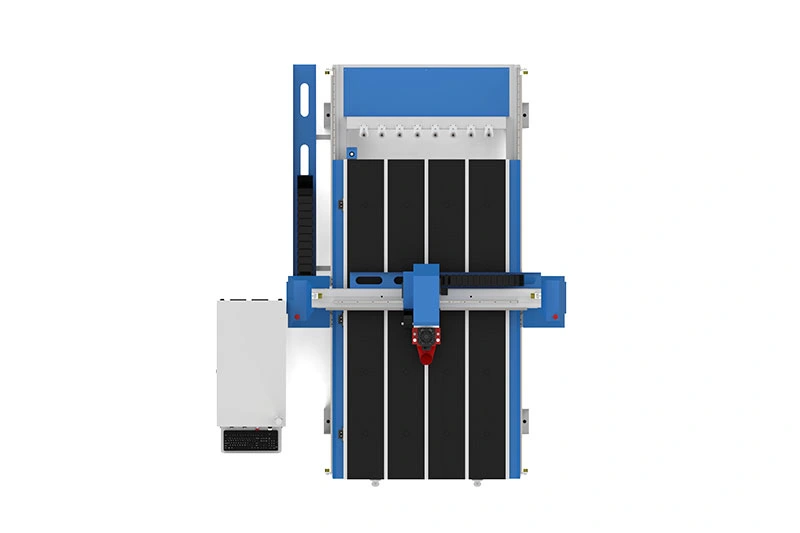
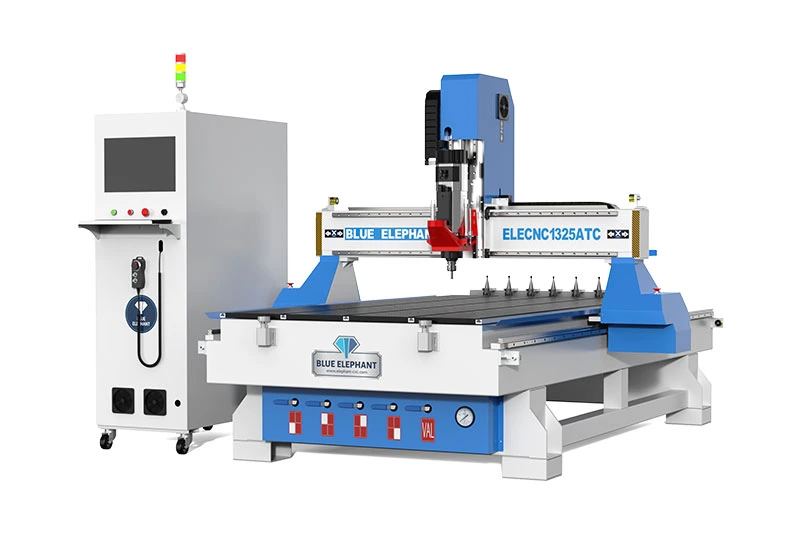
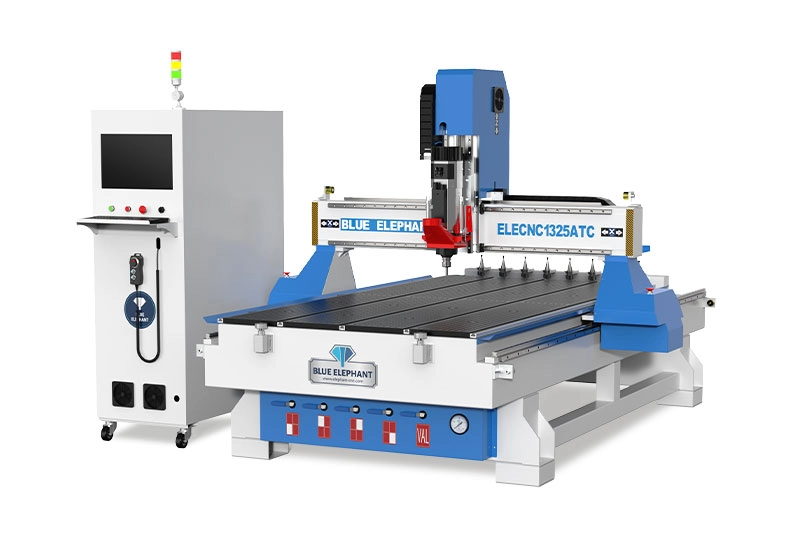
1325 Linear ATC CNC router is popularly used in woodworking, making signs, molds making, art crafts making, etc. The automatic tool changer magazine carries 8 cutters. It can change different tools for your reference.
Features
- Adopts a linear automatic tool change mode with fast tool-changing speed and high processing efficiency.
- Equipped with an independent control cabinet, making operation and maintenance more convenient.
- Features a 9kW air-cooled spindle with high speed and strong cutting capability for workpieces.
- Uses internationally imported brand components to ensure the longest machine service life.
Parameters
| Model | ELECNC-1325 ATC |
| Working area | 1300*2500*200mm |
| Spindle | 9kW ATC HQD air-cooled spindle |
| Inverter | 11kW Fuling inverter |
| Tool magazine | 8 pieces linear tool magazines |
| Control system | Taiwan LNC with MPG handle wheel |
| Motor and driver | 1500W Leadshine servo motor and servo driver |
| Reducer | Japan Shimpo reducer |
| Working Table | Aluminum T-slot & vacuum table |
| Limit switch | Japan OMRON limit switch |
| Lubrication system | 1.5L Auto oil lubrication system |
| Voltage | 380V±10%, 3Phase, 50Hz/60Hz |
| Vacuum pump | 7.5kW vacuum pump, two stage, air-cooled, two impeller |
| X,Y,Z Transmission | Taiwan helical rack gear 1.5M; Taiwan #25 square linear guide for X,Y axis; Taiwan TBI ball screw for Z axis |
| Cable | High soft shield with copper wire to protect against static electricity, German Igus brand, with CE, cUL, FDA certificate |
| Dust collector | Double bag dust collector |
| Tool sensor | Auto tool sensor |
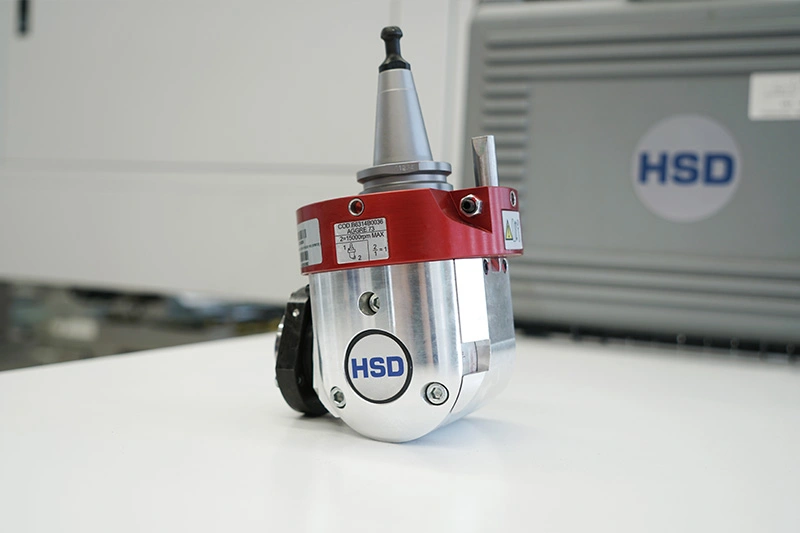
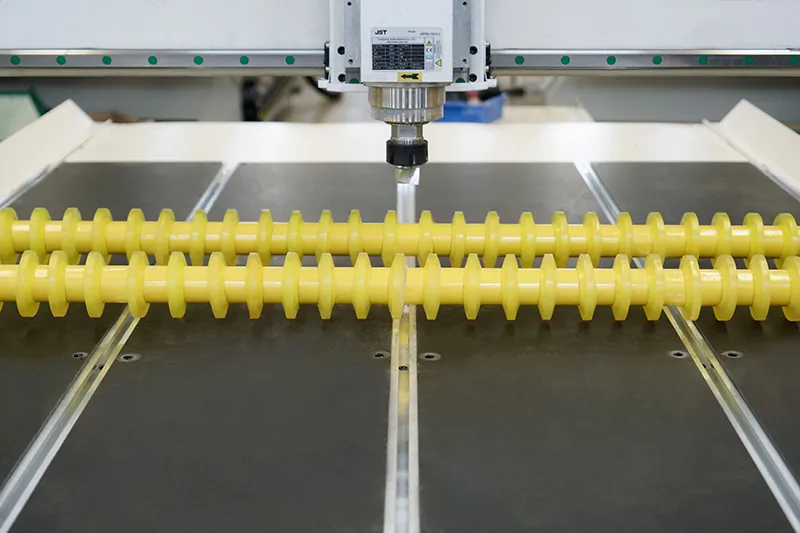
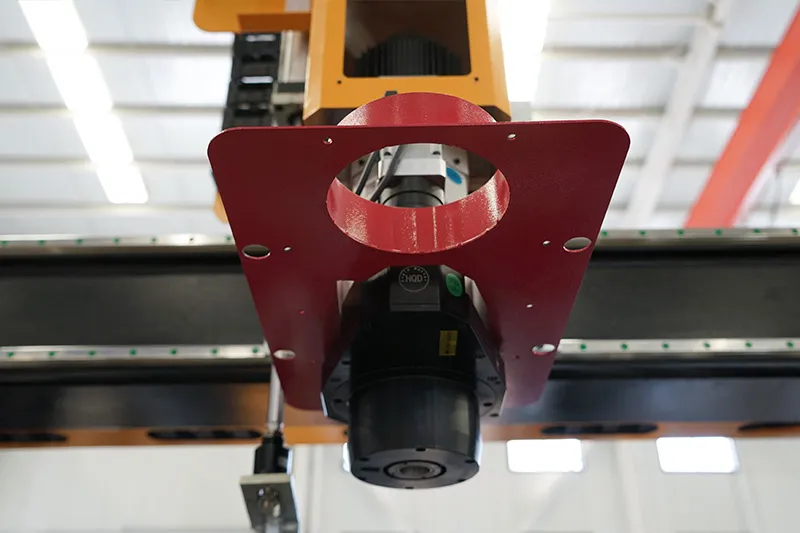
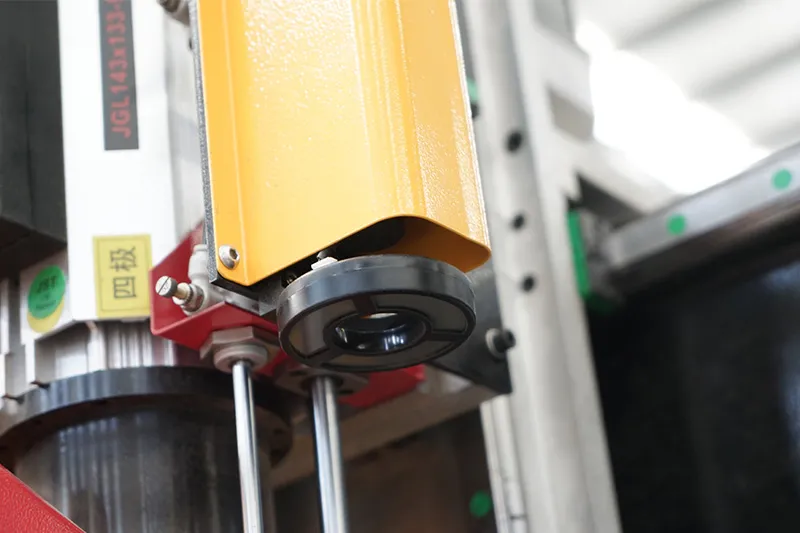
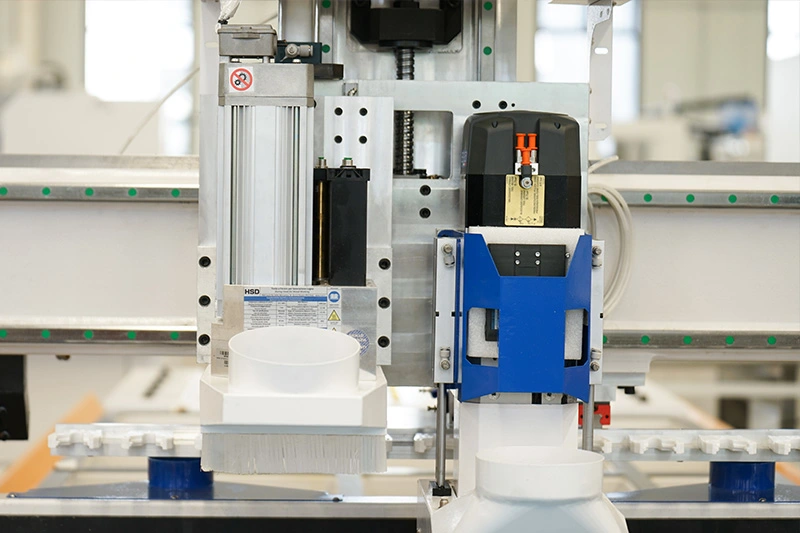
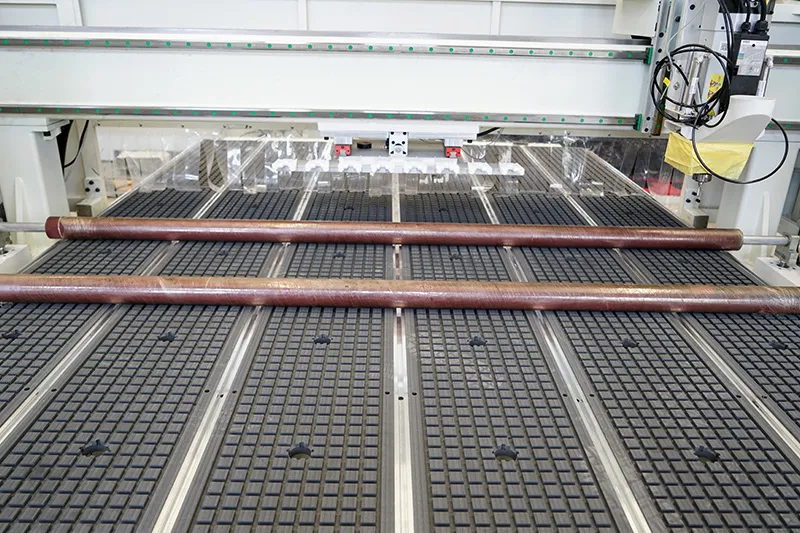
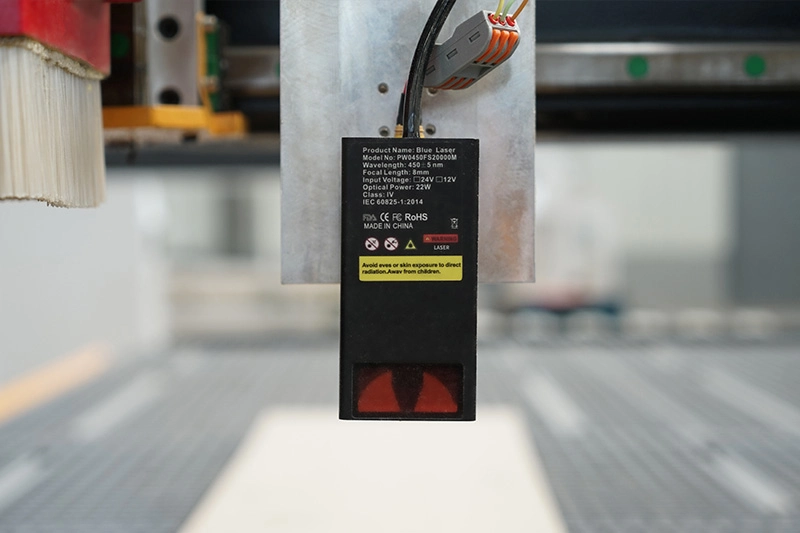
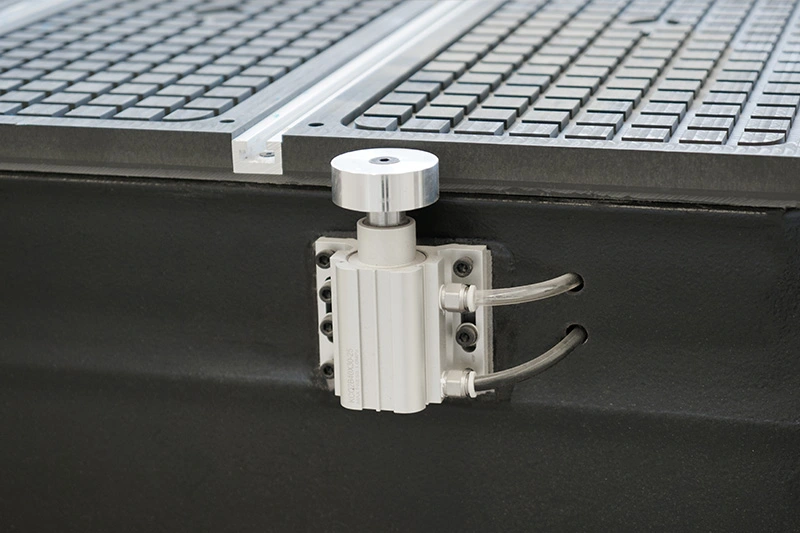
ATC CNC Router Optional Parts
ATC 1325 CNC Router Application
A 1325 Linear ATC CNC Router is widely used in industries that require frequent tool changes and high production efficiency. By automatically switching between different cutting and drilling tools, the machine enables manufacturers to complete multiple machining processes in a single setup.
Common applications include furniture manufacturing, cabinet production, door making, interior decoration, sign fabrication, acrylic processing, and custom woodworking projects. It is particularly suitable for businesses that need to improve production speed, reduce manual labor, and maintain consistent machining accuracy across large production volumes.








1325 ATC CNC Router Wood FAQs
The main difference is the automatic tool-changing capability: a standard 1325 CNC router requires manual tool changes, while a 1325 CNC router ATC can automatically switch between different tools, significantly reducing downtime.
The 1325 ATC CNC router price generally falls between $10,000 and $30,000, depending on factors like machine configuration and spindle power; higher levels of automation result in a higher price.
Yes. The 1325 ATC CNC router for cabinet making is ideally suited for furniture manufacturing; it features automatic tool changing and automates various processes—such as cutting, drilling, and engraving—making it perfect for high-volume production in furniture factories.
Yes. The 1325 ATC industrial woodworking CNC router is also suitable for beginners; basic CNC knowledge, design skills, and safety awareness are all that are required.
Routine maintenance of the best CNC router for furniture factory involves tasks such as cleaning the machine table, checking the spindle cooling system and electrical components, and promptly replacing worn tools. Proper maintenance can extend the machine’s service life.
Errors in the 1325 ATC CNC router for MDF cutting can stem from various issues, including incorrect tool parameters or tool wear, inaccurate machine calibration, loose mechanical components, insecure material clamping, and incorrect cutting speeds or feed rates. Promptly identifying the root cause of these errors is essential for achieving more efficient machining.