
For any manufacturer, adopting 5-axis technology can greatly improve workshop productivity. Before making an investment, you may wonder whether a 5 axis CNC router is worth it and when it can bring real returns. This article will provide a practical, production-focused analysis to help you make a better decision.
1. ROI Analysis: Is It Worth the Investment?
1.1 Cost Components of a 5 Axis CNC Router Machine
The initial investment in a 5 axis CNC router includes more than just the machine purchase cost. It also involves software expenses, operator training, maintenance costs, and other related investments.
Compared with 3 axis CNC routers and 4 axis CNC routers, a 5 axis machine usually requires a higher upfront investment. However, the initial purchase price is only one part of the investment decision.
The more important factor is how much additional value the machine can create throughout its service life, including higher productivity, expanded machining capabilities, and the ability to take on more valuable projects.
Typical Investment Components of a 5-Axis CNC Router
| Cost Component | Typical Cost Range (USD) | Description |
| Machine Purchase | $50,000 – $300,000+ | Depends on machine size, configuration, spindle, and control system |
| CAD/CAM Software | $2,000 – $20,000+ | PowerMill, Mastercam, HyperMILL, Fusion 360, etc. |
| Operator Training | $500 – $5,000 | Training for machine operation and programming |
| Tooling Costs | $1,000 – $10,000+ | Cutting tools, tool holders, and replacement tools |
| Installation & Commissioning | $1,000 – $10,000 | Machine setup, calibration, and testing |
| Maintenance & Service | $1,000 – $5,000 / year | Routine maintenance and spare parts |
| Workshop Preparation | $2,000 – $20,000+ | Power supply, dust collection, air compressor, and facility upgrades |
1.2 Cost vs Output Comparison
Compared with a 3-axis CNC router, the same workpiece can be completed in about 5 hours instead of 8 hours with a 5-axis CNC router. This significantly increases the number of parts you can produce each day.
The difference may not seem large when looking at a single product, but when calculated over daily, weekly, or yearly production, a 5-axis CNC router can bring substantial returns.
With a 5-axis CNC router, you can take on more high-value projects, reduce outsourcing costs, improve production efficiency, and increase product value. Although the initial investment is higher, it can become a more profitable choice for your business in the long run.
1.3 Payback Period
The payback period of a 5-axis CNC router is typically around 12–24 months, depending on your production volume, applications, and business model.
If you are working in industries such as mold making, high-end furniture, or yacht interiors, a 5-axis CNC router can be an ideal investment. It helps you improve production efficiency, expand your capabilities, and achieve a strong return on investment.
2. Why Is a 5-Axis CNC Router Worth Your Investment?
As your manufacturing business grows and your production processes become more advanced, the demand for automation and complex machining increases. Especially for manufacturers working on molds, prototypes, and precision parts, traditional 3-axis CNC routers can no longer meet your specific production needs. A 5-axis CNC router has become essential.
2.1 One-time Clamping Reduce Huge Human Cost
With a 5 axis CNC router machine, most complex parts can be completed in a single setup. The X/Y/Z/A/B 5-axis movement allows the machine to approach the workpiece from different directions, improving machining accuracy and consistency. Operators only need to set up the workpiece once, which greatly reduces labor requirements and improves overall production efficiency.
2.2 Enables Complex 3D Machining
If your products involve curved surface machining, multi-angle structures, and complex 3D shapes, a 5 axis CNC router is the right choice for you.
It allows you to efficiently process:
- Curved furniture components
- Architectural and marine models
- Large sculptures and art pieces for the film industry
- Automotive and aerospace models
The advanced machining capabilities of a 5-axis CNC router help you take on higher-profit projects, complete complex outsourced jobs that were previously impossible, expand your business opportunities, and improve your market competitiveness.

2.3 Improves Surface Quality
A 5 axis CNC router allows the cutting tool to maintain the optimal machining angle against the workpiece surface. This helps reduce tool vibration, maintain more stable cutting pressure, and significantly improve surface finish quality.
With the excellent surface finishing capability of a 5-axis CNC router, you can reduce manual polishing work, improve production efficiency, and achieve more consistent product quality.
2.4 Longer Tool Life
When machining with a 5 axis CNC router, the cutting tool approaches the workpiece at an angle instead of cutting directly with the tool tip. The machine can also automatically adjust the tool direction according to the machining path.
This machining method helps reduce excessive tool wear, protect the cutting tool, and extend its service life. As a result, you can reduce tooling costs, minimize downtime, and improve the overall utilization of your machine.
2.5 Higher Cutting Capacity
The multi-axis movement capability of a 5 axis CNC router allows the cutting tool to machine the workpiece from multiple directions, reducing unnecessary cutting pressure and improving machining performance.
When processing multi-dimensional parts such as molds and curved furniture components, a 5 axis CNC router can complete more machining steps in a single operation, providing stronger cutting capability and greater efficiency.
From a long-term business perspective, 5-axis machining can significantly improve your production efficiency, expand your processing capabilities, and create long-term value by increasing your overall profitability.
The video below showcases the advanced machining capabilities of a 5-axis CNC router:
3. Who Should Invest in a 5-Axis CNC Router?
A 5-axis CNC router is worth considering if:
- Your production involves complex parts, high-end customized products, or high-precision machining requirements.
- You serve industries such as curved furniture, custom furniture, high-end interior 3D carving, aerospace, automotive, marine, or mold manufacturing.
- Your current production process spends too much time on multiple setups and you need to upgrade your machining efficiency.
- You want to improve your competitiveness by offering machining capabilities that your competitors do not have.

However, a 5-axis CNC router may not be the right investment if:
- Most of your work involves simple flat machining, such as cabinet panel cutting, sign making, or standard furniture components.
- Your budget only covers the machine purchase but cannot support additional costs such as software, training, and maintenance.
- You do not have experienced technical staff or enough time to learn advanced CAM programming.
- Your order volume is low and you do not require industrial-level production capacity.

4. Common Concerns Before Buying a 5-Axis CNC Router
Investing in a 5-axis CNC router requires a higher budget. However, many companies hesitate to buy one not only because of the cost, but also because they worry about operation, operator skills, maintenance, and after-sales support. If you have the same concerns, the following information can help you make a better decision.
- Operation concerns: If you are new to 5-axis machining, you may wonder whether a 5-axis CNC router is difficult to operate. Compared with a 3-axis CNC router, 5 axis CNC routing involves more moving axes and more complex machining paths. However, modern 5-axis machines usually come with user-friendly control systems, simulation functions, and automatic toolpath optimization. With proper training, operators can quickly learn how to use the machine.
- Professional programming requirements: CAD/CAM software has made 5-axis programming much easier. Many common machining jobs can be completed by automatically creating toolpaths and checking possible errors in advance. If your team already has basic 3-axis CAD/CAM experience, learning 5-axis programming will be much easier.
- Maintenance costs: You may think that a 5-axis CNC router requires higher maintenance because it has extra rotary axes and more complex structures. In fact, daily maintenance is similar to high-end 3-axis and 4-axis CNC routers. Regular lubrication, machine inspection, spindle maintenance, cleaning, and preventive checks can keep the machine running smoothly.
5. How to Choose a Reliable 5-axis CNC Router?
Choosing the right CNC router is important for your business growth. Before making a decision, you should evaluate the machine based on your production needs and the following key factors:
5.1 Specify the Processing Materials
If you mainly process non-metal materials such as wood, foam, or plastic, you should choose a 5-axis CNC router designed for non-metal machining. If you need to machine metal materials, a 5 axis CNC milling machine is a better choice.
5.2 Core Hardware and Configuration
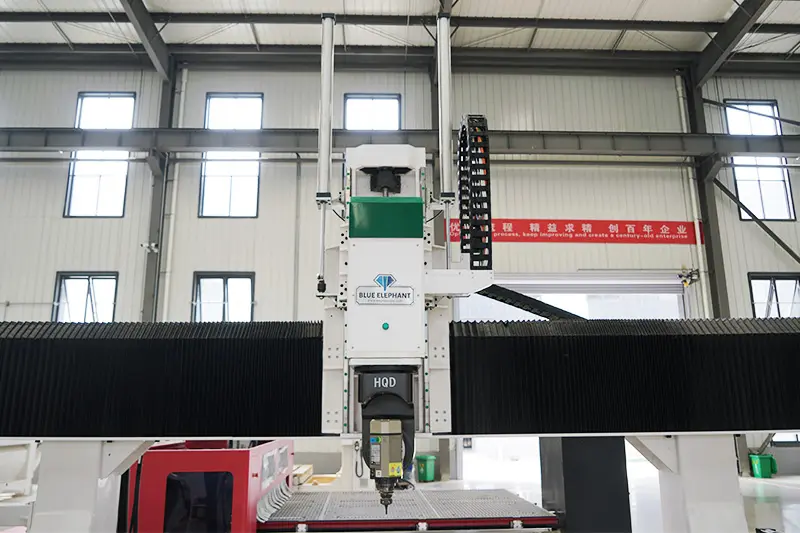
The machine structure, 5 axis CNC router head, spindle, servo system, guide rails, and transmission system are key components you should carefully evaluate before purchasing. Choosing machines with reliable and well-known components can ensure better stability and longer service life. Although high-quality configurations require a higher initial investment, they usually provide more stable performance and lower operating risks.
5.3 Control Systems and Software
The control system is the brain of the machine. A reliable 5-axis control system should provide an easy-to-use interface, stable multi-axis movement, machining simulation, collision detection, and RTCP (Rotating Tool Center Point) functions.
Software compatibility is also important. Common 5-axis CAM software includes PowerMill, Alphacam, Fusion 360, Mastercam, and HyperMILL.
5.4 Brand Positioning and Selection
Before purchasing, you should consider the supplier’s product positioning, industry experience, and international market experience. Do not choose only based on a low price. Instead, select a supplier that matches your business needs and long-term development goals.
5.5 Support Systems
You should also evaluate whether the supplier provides remote technical support, operator training, spare parts supply, installation services, and machine upgrades. A complete service system can help reduce operational risks and ensure stable production.
FAQ
1. 3 Axis vs 4 Axis vs 5 Axis CNC Router: What’s the Difference?
A 3-axis CNC router is a cost-effective solution for simple flat cutting and basic carving applications.
A 4-axis CNC router adds rotary machining capability, allowing it to handle more complex 3D carving projects. However, its machining flexibility and accuracy are still limited compared with a 5-axis CNC router.
A 5-axis CNC router can operate from multiple angles and handle complex curved surfaces and 3D shapes. It is designed for advanced manufacturing applications that require higher precision and more flexibility.
2. How Long Can a 5-Axis CNC Router Last?
A high-quality 5-axis CNC router can typically last more than 10 years with proper maintenance.
Regular maintenance, including guide rail lubrication, spindle care, accuracy calibration, and component inspection, can effectively extend the machine’s service life and keep it running reliably.
3. What Materials Can a 5-Axis CNC Router Process?
An industrial 5-axis CNC router can process a wide range of materials, including:Solid wood、MDF、Foam、Plastic、Composite materials、Aluminum.
4. Is a 5-Axis CNC Router Suitable for Small-Batch Custom Production?
Yes. A 5-axis CNC router is especially valuable for small-batch, high-value customized products.
For applications such as custom furniture, artistic carving, high-end interior decoration, and model making, 5 axis CNC router manufacturers can create unique products with higher added value and achieve better profits through advanced machining capabilities.
5. How Much Space Does a 5-Axis CNC Router Need?
The required space for a 5-axis CNC router depends not only on the machine size but also on the additional space needed for material loading and unloading, operator movement, dust collection installation, and machine maintenance.
Final Thoughts
Not every manufacturer needs to invest in a 5-axis CNC router. Whether it is worth the investment depends on your production needs and business goals. With 16 years of experience in 5-axis CNC router manufacturing, Blue Elephant has helped over 500 customers upgrade their production. Our machines feature premium components and heavy-duty machine structures for reliable performance.
If you are looking for a professional 5-axis CNC machining solution, contact Blue Elephant for customized recommendations based on your specific production requirements.
You may also like these related posts: