
CNC routers generate wood dust. A CNC router dust collection system captures chips through dust shoes, hoses, and filtration. Unchecked debris damages machines and reduces cut quality. This CNC router dust collection buying guide matches the system to CFM, materials, and floor layout.
1. Different Types of CNC Router Dust Collection Systems
A complete CNC router dust collection package includes more than a dust collector. It combines dust capture components, hoses, ductwork, filtration units, and the collection system itself. Understanding these components helps you choose the right configuration.
1.1 Small-Scale & Entry-Level Solutions
Small-scale entry systems use single-stage filtration. An impeller draws dust-laden air through the fan and forces it into the collection bags. Single-bag and double-bag models share this mechanical logic. They differ only in bag capacity and overall footprint.
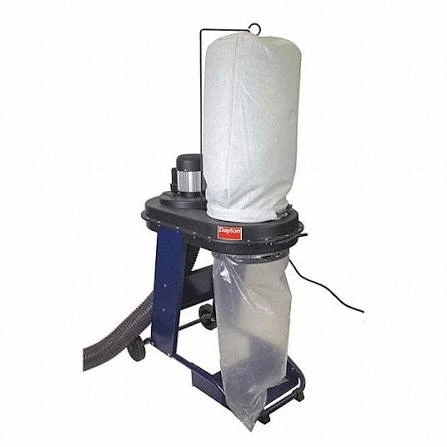
Single Stage CNC Router Dust Collector
1.1.1 Single-Bag Dust Collector
- Best For: Small workshops and single CNC machines.
- Pros: Low upfront cost. Simple maintenance.
- Cons: Limited airflow. Frequent cleaning required to prevent suction drops.
1.1.2 Shop Vac vs. Dedicated Dust Collector
Using a shop vac on an industrial CNC is a common entry-level mistake. The difference is clear: shop vacs are built for small-scale DIY hobbyists, while dedicated dust collectors are engineered for larger commercial factories.
| Feature | Shop Vac / Dust Extractor | Dedicated Industrial Dust Collector |
| Airflow Profile | Low CFM, High Static Pressure | High CFM, Low Static Pressure |
| Debris Capture Strategy | Pulls heavy particles through tight slots. | Moves massive air volumes to swallow continuous chip streams. |
| Operational Limit | High noise, chokes quickly, unfit for long continuous runs. | Quiet, continuous industrial operation with high-volume capacity. |
1.2 Cyclone Dust Collector
- Best For: Medium-sized woodworking factories.
- Pros: Better dust separation, less filter clogging.
- Cons: Larger footprint.
These heavy-duty systems use two-stage separation. The first stage uses a cyclone vortex to drop large wood chips into a collection bin. The second stage pushes fine airborne dust into the filtration chamber.
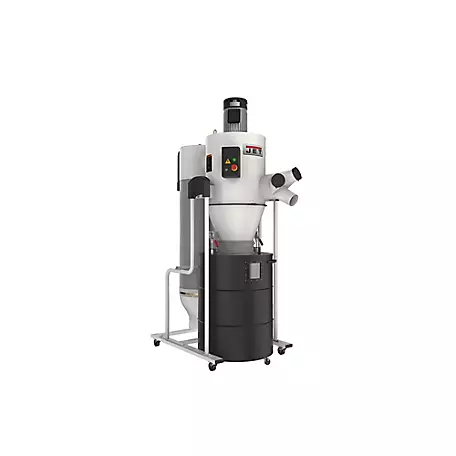
Two Stage Cyclone CNC Dust Collector
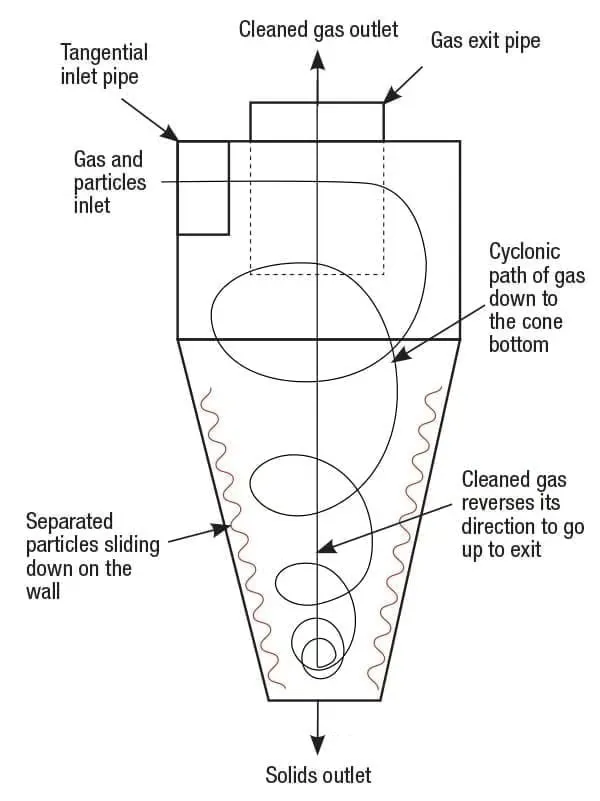
Cyclone Separator Airflow Working Principle
Industrial operations use two configurations:
- Baghouse Systems: Built for raw wood processing, high chip volumes, and moist or resinous shavings. The heavy-duty fabric bags resist abrasion and moisture clogging. This configuration suits continuous routing across multiple machines.
- Cartridge Filter Systems: Built for ultra-fine dust from MDF, engineered wood, and high-precision CNC engraving. The pleated design maximizes filtration surface area in a compact footprint to trap particles. An automatic pulse-jet cleaning system dislodges dust buildup to maintain constant suction.
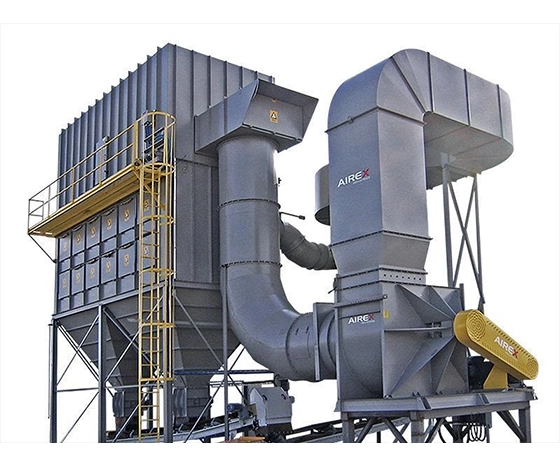
Industrial CNC Baghouse Dust Collection System
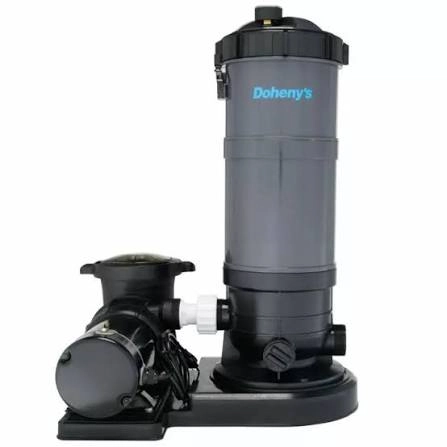
CNC Cartridge Filter Pulse Jet System
1.3 Central Industrial Dust Collection System
- Best For: Large facilities running multiple industrial CNC routers
- Pros: Centralized floor management, high static pressure, and stable airflow.
- Cons: High initial ductwork and installation costs.
This industrial system connects all machines to a single exterior filtration hub through a ducting network. It serves production lines where consistent air velocity and plant safety are critical.
2. Key Factors for Selection
Machinery setup, workshop scale, and processing materials set CNC Router dust collection requirements. These variables dictate your system airflow, motor power, filtration method, and ductwork design.
2.1 Match Airflow with CNC Router Size
What airflow do you need for CNC router dust collector CFM? A standard 10-inch table saw requires 350 to 500 CFM. A single 4×8 industrial CNC router usually requires a dust collector size that can provide 500 to 1200 CFM. Higher capacities of 3000 to 5000 CFM are only required on a central ducting network.
2.2 Choose the Right Motor Power
Airflow demands determine your motor size. Match your shop scale to these standard industrial configurations:
- 3 HP: For single 4×8 entry-level or mid-range CNC routers running standard tooling.
- 7.5 HP: The industry standard for high-speed nesting lines or dual-head configurations.
- 10 HP and above: For multi-spindle setups, deep 3D carving, or long-run central systems.
Undersizing below 3 HP causes weak suction and pipe clogging. Oversizing past your ductwork capacity wastes energy and increases monthly utility bills.
2.3 Consider the Material You Process
Your material selection determines your filtration strategy. Solid wood processing creates coarse, heavy chips. These particles settle quickly. Friction from high-speed cutters easily ignites dry sawdust, creating a severe fire hazard. It requires robust spark detection and fire suppression systems.
MDF produces fine, powdery dust containing chemical binders. Proper extraction is important when using a CNC router for MDF. This requires MERV 15/16 or PTFE-coated cartridge filters in the primary stage. HEPA filters serve only as secondary safety filters for indoor air return systems.
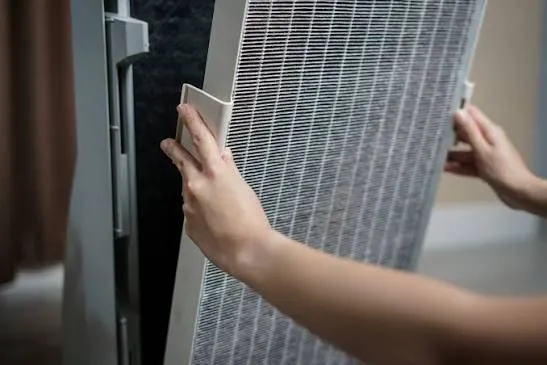
Secondary HEPA Filter Replacement CNC Dust
Plastics and acrylics generate static-charged, stringy shavings. These materials cling to surfaces and clog standard ductwork. These materials require higher air velocity to prevent dust settling. They also require anti-static grounded ducting to eliminate static buildup.
2.4 Spindle-Mounted vs. Z-Independent Dust Shoes
A CNC router dust shoe, also called a CNC router dust boot, mounts around the cutting tool. Brushes or skirts contain debris at the source. Learn more about selecting suitable CNC router accessories for different machining applications.
- Spindle-Mounted (Moves with Z-Axis): This type moves vertically with the spindle. It risks collision during deep 3D carving. During shallow cuts, it leaves large gaps. This gap causes dust leakage and requires higher system suction.
- Z-Independent (Fixed-Height): This type stays stationary relative to the material while the spindle plunges inside. It maintains surface contact during flat panel nesting and face milling to maximize particle capture.
- Application Guide: Use spindle-mounted shoes for dynamic 3D reliefs and complex engraving. Use Z-independent shoes for high-speed flat sheet processing and automated cabinet nesting.

Spindle Mounted CNC Router Dust Shoe
2.5 Downdraft Tables for Supplementary Control
A downdraft table is a separate, specialized workstation for manual operations. It does not replace a CNC router vacuum table. Positioned near the CNC machine, it captures fine airborne dust during manual sanding, secondary edge trimming, and manual routing. This workstation suits small components unsuited for a large CNC table.
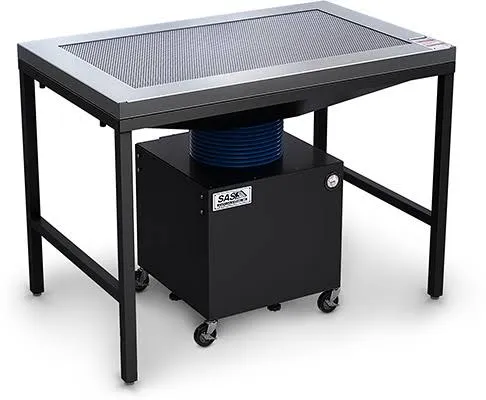
Industrial Woodworking Downdraft Sanding Table
2.6 International Safety Compliance
International buyers prioritize environmental compliance. To select a dust collection system, you must match your workshop material to international safety standards.
For European markets, use Class L systems for softwoods. Choose Class M systems with PTFE filters for resinous MDF. Select Class H systems for stone and engineered quartz. If your factory uses an indoor air return system, you must install a secondary HEPA filter. This system captures particles down to 0.3 microns.
For North American markets, systems must meet OSHA permissible exposure limits. Choose a two-stage cyclone system to handle hazardous respirable crystalline silica. For fine MDF chemical dust, add automatic pulse-jet cleaning to prevent filter clogging. If you exhaust air directly outdoors, you can bypass the secondary HEPA filter to reduce factory maintenance costs.
2.7 CNC Router Dust Collection Selection Guide
The following guide recommends dust collection systems for diverse CNC machinery setups.
| CNC Machinery Setup | Primary Materials | Recommended System | Est. Airflow and Power Specs | Key Feature to Verify |
| Single 4×8 CNC Router | Solid wood and light plastics | Single-Stage or Small Cyclone | 500 to 800 CFM and 3 HP | Mobile footprint and easy waste bag replacement |
| High-Speed Nesting CNC | MDF, particle board, and melamine | Two-Stage Cyclone System | 800 to 1200 CFM and 5 HP | Pleated cartridge filter with MERV 15 plus rating |
| Multi-Spindle or Heavy 3D | Hardwood and high-volume timber | Heavy-Duty Baghouse System | 1200 to 2500 CFM and 7.5 to 10 HP | High-capacity bin and abrasion-resistant fabric |
| Multiple CNC Routers | Mixed wood, MDF, and acrylics | Central Dust Collection Network | 3000 to 5000 plus CFM and 15 HP plus | Variable frequency drive and automated blast gates |
| Stone and Quartz CNC | Marble, granite, and quartz | Wet Collector or Class H Cyclone | 800 to 1500 CFM and 7.5 HP plus | Secondary HEPA filter for indoor air return systems |
3. Common Mistakes to Avoid
- Matching Horsepower Instead of Airflow: Buying a system based on motor power instead of actual CFM and static pressure causes weak suction.
- Ignoring Future Expansion: Designing ductwork without air volume margins leaves no room for growth. Adding a second CNC machine later forces a costly system redesign.
- Overlooking Hose Static Buildup: Fine dust rubbing inside non-grounded plastic hoses creates high static voltage. This discharge arcs into the CNC controller, causing signal interference. It triggers false limit switch errors, ruins toolpaths, destroys expensive workpieces, or sparks dust fires.
Anti-static hoses with integrated copper wire eliminate high static voltage. Connect this wire to the machine chassis grounding block for CNC router dust collection grounding.
- Air-Blowing the Worktable: Using high-pressure air guns to clean the machine bed pushes settled fine dust into the air. This action creates a toxic environment. To solve this problem, program an automated vacuum cycle into your toolpath code or use a spindle brush block.
4. Installation Tips
4.1 Hose and Ductwork Setup
Pipe diameter, length, and bends determine static pressure loss. Every 90-degree elbow creates friction equal to several feet of straight pipe. Undersized diameters choke air velocity. Run pipelines along short and straight paths to minimize airflow loss and maintain critical transport velocity.
Install a CNC router dust collection hose support system. Hang heavy suction hoses vertically from the ceiling or use an articulating boom arm. This setup prevents ductwork weight from applying lateral tension. It protects carving accuracy and stops hoses from scratching finished workpieces.
4.2 Brush Height Optimization
Dust shoe brushes channel airflow rather than blocking particles. Maintain a slight contact or a gap under 6 millimeters between the brush tips and the workpiece. This spacing balances the incoming air velocity with the duct suction. It creates a high-velocity capture zone at the cutting point to prevent fine dust leakage.
Dust shoe brushes channel airflow rather than blocking particles. Maintain a slight contact or a gap under 6 millimeters between the brush tips and the workpiece. In nesting production, dust collection performance works together with the CNC router vacuum table to maintain stable material holding and clean machining. This alignment creates a high-velocity capture zone.
4.3 ATC and Tool Clearance Challenges
Automatic tool changers and extended milling bits both force standard dust hoods to sit too high. This challenge is common in automatic tool changer CNC router configurations. This height gap causes severe air dispersion and destroys extraction velocity.
To prevent tool changer collisions, use a pneumatic lift mechanism. This cylinder raises the dust hood automatically during tool swaps and lowers it for cutting.
To handle extra-long spiral bits, use a modular dust boot with magnetic quick-release spacers. Operators can stack these blocks to extend the hood depth. This adjustment matches the brush height to the active tool length.
5. Maintenance Checklist
Regular dust collection maintenance protects system reliability. This routine works together with proper CNC router maintenance to extend your entire setup’s lifespan. Use this checklist to track your scheduled shop service.
| Maintenance Item | Frequency | Detailed Metrics |
| Clean Filters | Daily or Weekly | Blow down filters with compressed air or activate the automatic pulse-jet system. |
| Check Hose Connections | Weekly | Inspect hose clamps and sealing gaskets. Tighten connections near the high-vibration spindle area. |
| Empty Dust Bins | Regularly | Drain the collection bin at 75 to 80 percent capacity. This prevents dust backflow and filter clogging. |
| Test Airflow and Grounding | Monthly | Listen for abnormal motor bearing noise. Check anti-static grounding wires to ensure continuous conductivity. |
6. FAQ
Q1: What Size Dust Collector Do I Need for a CNC Router?
Match your tool port airflow requirements. A suitable dust collector for CNC router applications depends on airflow, static pressure, and machine size. A single industrial 4×8 router requires a 500 to 1200 CFM collector powered by a 3-HP to 5-HP motor.
Q2: How Much CFM Does a CNC Router Dust Collector Need?
Most industrial CNC routers require 500 to 1200 CFM at the dust shoe. This concentrated air volume captures chips effectively.
Q3: Can One Dust Collector Work With Multiple CNC Routers?
Yes. You can connect multiple machines through a central duct network. Use automated blast gates to maintain transport velocity at the active machinery.
Q4: Does CNC Router Spindle Power Affect Dust Collection Requirements?
Not directly. However, higher spindle power enables faster feed rates and larger tooling, which generates more waste.
Q5: Can I Reuse the Large Amounts of Sawdust Collected?
You can use raw wood shavings to absorb workshop oil spills or compress them into eco-firelogs. Do not burn resinous MDF dust due to toxic chemical binders.
Q6: What Is the Best Dust Collector for a CNC Router?
The best dust collector for a CNC engraving machine varies depending on the situation. Single machines often use bag collectors, while factories with multiple CNC routers need cyclone or central dust collection systems.
7. Final Thoughts
Selecting the right dust collection system protects machine longevity, edge quality, and factory compliance. Unchecked debris drops production throughput. View our industrial machinery and extraction solutions at Blue Elephant CNC.
You might also want to know:
- CNC Router-The Ultimate Guide for Beginner and Expert
- How to deal with the dust during the work of CNC nesting machine
- 8 Best Cnc Router For Woodworking
- Free CNC Router Spindle Buyer Guide(Christmas)
- 2 Cabinet Making Solutions To Help You Make More Money