
Furniture manufacturers know that edge banding materials affect finished product quality. Poor materials cause edge chipping and thick glue lines, while high-quality bands seal the board core and block moisture. This guide helps you select the right materials and understand the machine requirements.
1. Main Types of Edge Banding Materials
1.1 PVC Edge Banding Materials
PVC is the high-volume industry standard for straight lines and tight curves. PVC is wear-resistant and waterproof. Manufacturers choose it for low raw material costs, high flexibility, and a color-through design.
Lower-tier PVC turns white during trimming due to excess calcium carbonate fillers. It shrinks near heat sources, cannot be recycled, and releases toxic chlorine gas during improper high-temperature disposal.
1.2 ABS and PP Edge Banding Materials
ABS and PP are currently the most popular materials in the high-end custom furniture industry. They are also premium, chlorine-free thermoplastic alternatives. These materials are heat- and impact-resistant and structurally stable, making them suitable for your cabinet manufacturing.
The primary advantage is trimming-induced whitening and smooth export clearance. They burn safely with low toxic releases and meet stringent Western environmental regulations such as REACH.
The main drawback is processing difficulty. They require precise heat management. Since PP is highly non-polar, standard hot-melt adhesives cannot grip it effectively.
ABS and PP are relatively expensive. Consider the ABS vs PVC edge banding cost comparison carefully. Higher raw material expenses exist, but they are necessary to secure eco friendly edge bands for European market compliance.
1.3 Acrylic (PMMA/3D) Edge Banding Materials
Acrylic edge banding creates a high-gloss finish using PMMA polymer technology, building a 3D illusion for your custom cabinetry. It is commonly used for high-gloss acrylic panels and premium cabinet doors.
The benefit is deep reflection and durability. A transparent top layer shields the backing print, providing scratch resistance.
High hardness brings brittleness. Processing on standard machinery is challenging. Dull cutters or setting errors cause ugly edge chipping during trimming.
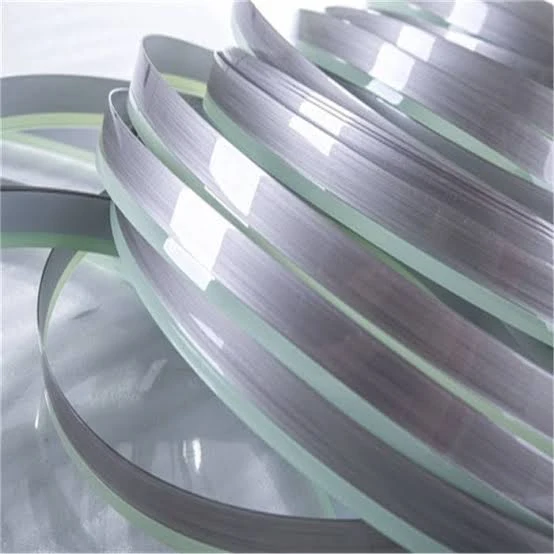
High Gloss Acrylic PMMA Edge Banding
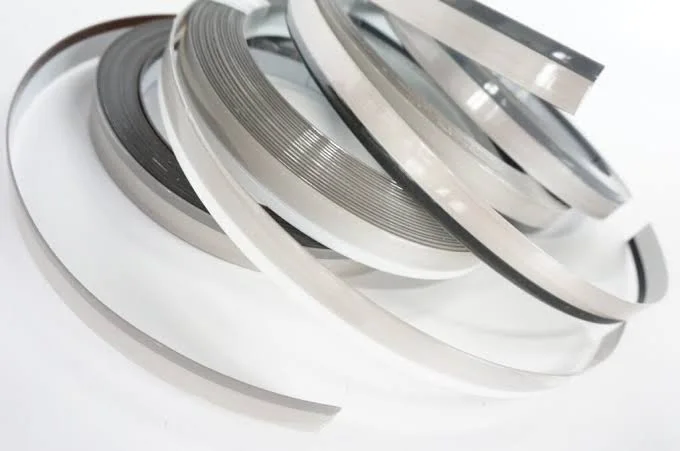
Glass Effect 3D PMMA Acrylic Edge Band
1.4 Wood Veneer and Solid Wood Edge Banding Materials
Real wood veneer and solid wood bands supply authentic timber textures. Large master rolls are finger-jointed from short timber sections into continuous strips.
You get natural aesthetics and seamless finishing as primary benefits. A tough fleece or heavy paper backing integrated into the veneer layer stops splits during tight bending passes.
Wood reacts to ambient factory humidity. This moisture absorption causes expansion and contraction, leading to open glue lines and delamination under uneven press pressure.
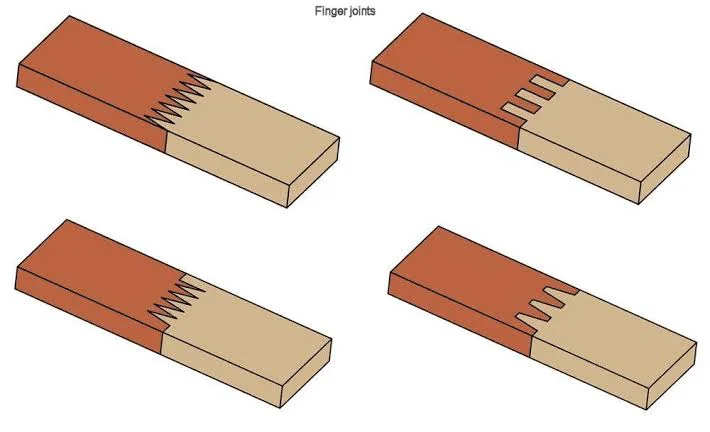
Woodworking Veneer Interlocking Finger Joints Diagram
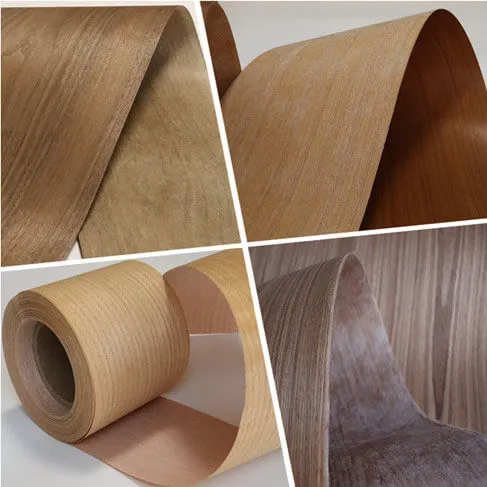
Natural Wood Veneer Edge Bands Fleece Backing
1.5 Melamine Edge Banding Materials
Melamine edge banding is made from treated decorative paper with a printed woodgrain or solid color.
The advantage is low cost and easy to process. It feeds smoothly and cuts cleanly on entry-level machinery without heavy-duty tooling.
This paper-based material chips easily under daily bumps. Because it looks cheap and wears out fast, top-tier custom furniture brands have gradually abandoned it.
1.6 Specialty Edge Banding Materials
These materials serve specific industrial applications rather than standard furniture production.
Laser bands use a co-extruded functional layer for zero-glue-line fusion. The downside is that it’s expensive, and factories must be equipped with high-precision laser or hot air edge banding machines, which presents a high technical barrier.
Metal-look strips use real aluminum or foil laminates for industrial accents. Their metallic appearance creates unique decorative effects, but the metal layer increases your cutter wear during trimming.
High-pressure laminate (HPL) edge bands feature a heavy-duty laminate layered with backing paper, specifically engineered to seal high-wear surfaces such as lab and kitchen countertops. Their disadvantages are that they are extremely hard, brittle, and heavy, requiring stronger tooling and processing systems.
Conductive edge banding is engineered for access floors and electronic facilities, these strips control static discharge. However, they serve a niche market, requiring dedicated conductive adhesives and grounding compatibility.

High Pressure Laminate HPL Countertop Laboratory Furniture
2. Best Edge Banding Materials for Different Furniture Applications
- High Moisture and Heat Environments: If your kitchen and bathroom cabinets face such environments, use high-performance ABS or PP strips paired with PUR hot melt glue. This seals out steam and stops delamination.
- High-Frequency Impact Environments: 1.5mm – 2mm PVC or ABS banding. These two materials are impact-resistant.
- High-Premium Luxury Furniture: Achieve a luxurious piano-lacquer texture with this material. Upgrade high-end J-pull profiles with 3D acrylic or laser zero-joint edge banding. This creates a seamless, handleless look for premium kitchens.
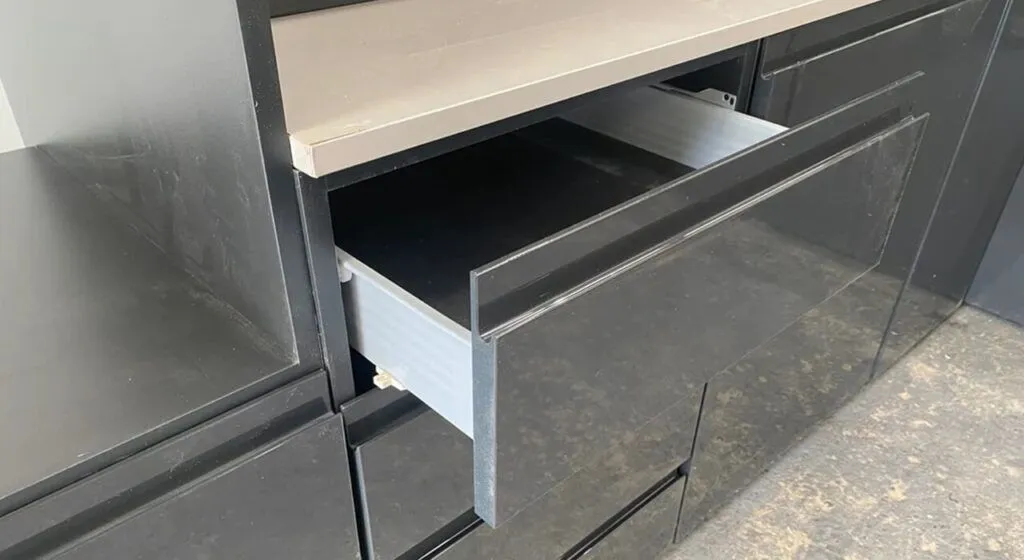
Integrated J Pull Handle Kitchen Cabinet Door
- Special Commercial Scenes: Band plywood bed frames completely on dormitory furniture to block bedbug nesting points. Skip hidden blind zones like drawer bottoms and tongue-and-groove back panels to decrease your material waste.
3. Material Selection and Machine Processing
Selecting an edge banding material goes beyond appearance and cost; the adhesive system and machine setup dictate final performance.
3.1 Material, Machine, and Glue Matching
3.1.1 Thin PVC and EVA Systems
Thin PVC banding between 0.4mm and 0.6mm melts under excessive heat. Pairing it with EVA hot-melt glue can save costs.
EVA relies on heat-activated mechanical bonding. This creates an open glue line risk under high summer workshop temperatures. Always lower the pressure roller settings when processing thin PVC. Excess pressure forces hot glue out, which scratches the board surface during your scraping pass. If you are experiencing this, check our diagnostic guide.
3.1.2 Acrylic and Laser Edge Systems
Rigid acrylic or PMMA demands laser or hot-air seamless edge banding systems. These high-gloss surfaces are sensitive. Minor glue pot misalignments leave unremovable black lines and glue smears.
At high speeds exceeding 20 m/min, this system achieves seamless, glue-free fusion. It needs no glue pot cleaning, carbonization, and daily preheating to cut plant management costs.
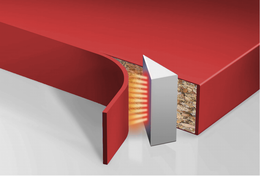
Hot Air Zero Joint Seamless Edge Banding Technology
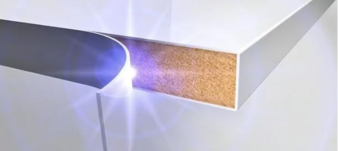
Laser Zero Joint Seamless Edge Banding Fusion
3.1.3 Veneer, HPL, and PUR Systems
Natural wood veneer absorbs moisture and warps. HPL is rock-hard with intense spring-back. Both materials require reactive PUR systems.
The irreversible chemical cross-linking and moisture-curing reaction of PUR forms an invisible glue line. This holding power fights HPL spring-back. As it absorbs ambient moisture to cure, it creates a barrier for veneer.
When using PUR glue with wood veneer and HPL edge bands, the edge banding machine configuration becomes critical. The edge bander must feature a sealed nitrogen-purged melting chamber to isolate the adhesive from ambient moisture, preventing premature chemical curing.
This cross-linking makes knowing how to clean PUR edge bander glue pot manifolds critical; failure to run the automatic purge program at the end of your shift allows remaining glue to harden and destroy the entire system.
3.1.4 PP, Melamine, and Special Adhesive Systems
High-heat and rigid adhesives can scorch thin melamine paper bands or fail to grip non-polar PP edge banding. Match them with APO hot-melt glue.
APO offers a wider open time and adjustable hardness. Since its polyolefin base shares the same chemical family as PP edge bands, it creates a bond without primers. This allows profile rubber rollers to track and seal thin bands without tearing or burning your textures.
3.1.5 Dual Glue Pot Systems
A dual-glue-pot system prevents chemical cross-contamination and slashes machine downtime. You don’t need to halt production for hours to flush and scrape a single pot when switching adhesive; operators swap the active unit in minutes. The setup stops glue burning during idleness and keeps your lines running.
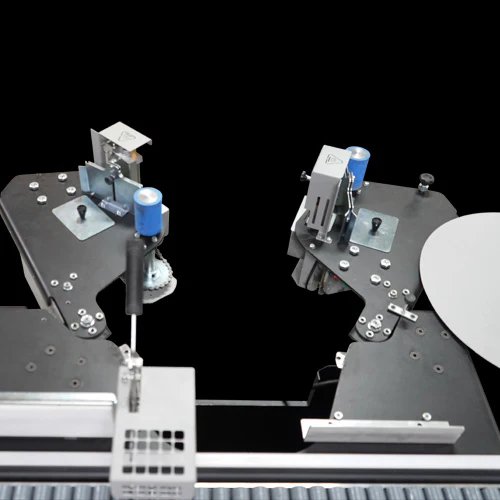
Automatic Edge Bander Dual Glue Pot System
3.2 Machine Setup and Production Optimization
3.2.1 Thickness-Based Machine Setup
Band thickness directly determines your station setup. Thin bands (0.4mm – 1.0mm) require high-precision fine scrapers to prevent panel scoring. Thick bands (2.0mm – 3.0mm) demand heavy-duty pneumatic press rollers to counter material spring-back and corner rounding units to blunt sharp edges.
3.2.2 Primer and Adhesion Troubleshooting
A primer is a backing coat applied to PVC and ABS bands that serves as a chemical bridge. It connects non-polar plastic substrates to polar hot-melt adhesive. Regardless of machine quality.
Lots of peeling issues are caused by primer failure rather than machine settings. To diagnose peeling issues, run the pre-milling unit to ensure a clean, square board edge, and apply stable, balanced pressure. If the band still strips off, the culprit is a primer defect rather than machine misalignment.
3.2.3 Edge Finishing and Surface Protection
- Trimming and Scraping: High material density accelerates cutter wear. Servo-controlled trimming units can adapt to board tolerance variations. It can prevent tools from digging in and reduce the risk of scratching high-gloss acrylics.
- Buffing and Edge Polishing: Dual buffing units smooth out micro-scratches on trimmed edges. Friction heat remelts the plastic surface, restoring the true color of your bands.
- Veneer Surface Finishing: Real wood veneer demands automated in-line finishing. High-end heavy machines handle flush sanding, wood stain application, and protective clear lacquer spraying.
3.2.4 Temperature Control
Low factory temperatures hurt machine performance. Delamination often comes down to freezing workshop air or cold boards. The hot melt instantly cools and skims over upon hitting your cold wood edge, failing before the pressure rollers bite.
To avoid costly edge banding rework, facilities must manage room temperatures. Factories need to preheat raw panel storage or install infrared board heaters at the machine inlet. This setup keeps the adhesive fluid.
4. Global Regulations and Sustainable Material Transition
Strict updates to EU REACH rules are forcing global furniture buyers away from traditional PVC due to toxic chemical restrictions. The export market is shifting fast toward eco-friendly ABS and PP alternatives. Transitioning smoothly requires specialized machinery.
The Blue Elephant E-70J automatic edge bander meets this requirement. It provides precise multi-stage temperature control and modified scraper units to process tough PP profiles. This setup lowers cutter gumming and edge-whitening risks, enabling eco-friendly production.
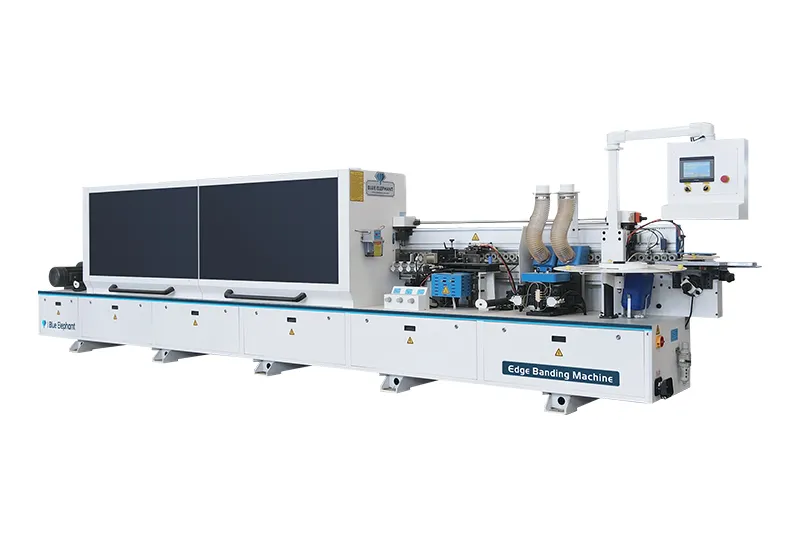
Blue Elephant E70J Automatic Edge Banding Machine
5. Final Material Selection Checklist
| Material Type | Cost Level | Environmental Compliance | Best Adhesive | Recommended Machine Configuration |
| Thin PVC Banding | Low | Restricted (EU REACH) | Standard EVA | Precision gluing roller, low-pressure anti-squeeze wheels |
| Eco ABS / PP | Mid to High | Complies with EU REACH | High-temp EVA / PUR | Multi-stage temperature control, whitening-free scrapers |
| High-Gloss Acrylic | High | Eco-compliant (Chlorine-free) | Laser Fusion / PUR | Servo-controlled trimming units, dual buffing wheels |
| Rigid HPL Laminate | Medium | Eco-compliant (High-wear) | PUR / Heavy-duty EVA | Heavy pre-milling, heavy pneumatic rollers, PCD cutters |
| Thick Wood Veneer | High | Natural eco-friendly | Reactive PUR | In-line sanding, automatic stain and lacquer stations |
| Conductive ESD Strips | High | Specialty ESD compliant | Dedicated conductive glue | Heavy-duty dust extraction, anti-static blowing bars |
6. FAQ
Q1. What is the Best Material Selection to Eliminate Thick Glue Lines on Dark Boards?
Deploy laser co-extruded PP bands or high-gloss acrylics to bypass traditional hot-melts. If running a conventional line instead, utilize a dual-glue-pot system with color-matched adhesives. These setups match the panel core and thin out visible seams.
Q2. How do You Prevent Edge Banding Chipping During Trimming When Processing Rigid Acrylics?
Processing brittle PMMA acrylics requires upgrading from manual machines to servo-controlled trimming units. Rigid 3D acrylic has immense material hardness; pairing it with automated mechanical tracking and ultra-sharp PCD cutters allows the knife to slice the polymer cleanly.
Q3. Which Premium Furniture Material Offers the Best Formaldehyde Emission-Free Edge Sealing Performance?
Use co-extruded laser PP and thick fleece-backed wood veneer. These premium materials completely encapsulate the raw particleboard or MDF core, blocking internal moisture absorption and preventing trace chemical outgassing from escaping.
Q4. Which Material Alternatives Allow Exporters to Easily Learn How to Comply with REACH Edge Banding Rules?
Global furniture exporters should phase out chemical-heavy PVC and adopt non-toxic ABS or PP thermoplastic alternatives. These advanced polymers are free of restricted plasticizers and heavy metals, allowing your finished furniture pieces to clear international customs borders smoothly.
Q5. What is the Best Material for Custom Kitchen Cabinet Edge Banding?
High-performance ABS or PP edge banding paired with PUR glue is ideal for kitchen cabinets, offering strong moisture resistance, durability, and long-term edge protection.
7. Final Thoughts
Choosing the right edge banding materials is the first step to achieving durable, high-quality furniture production. However, material performance also depends on proper machine configuration.
Blue Elephant provides reliable edge banding solutions with flexible setups for different materials, from PVC and ABS to PP and laser bands. Explore our edge banding machine solutions to find the right production match.
Explore more content in the posts below:
- How Much Does An Edge Banding Machine for Wood Furniture Cost?
- Edge Banding Machine Repair and Maintenance
- How Furniture Factories Edge Band Plywood Efficiently?
- 8 Ways to Make Money with An Edge Banding Machine for Plywood, MDF
- What is Edge Banding Machine?
- EVA vs. PUR Edge Banding: Which One Fits Your Business?